
Running a Remote Lab from 1,400 Miles Away
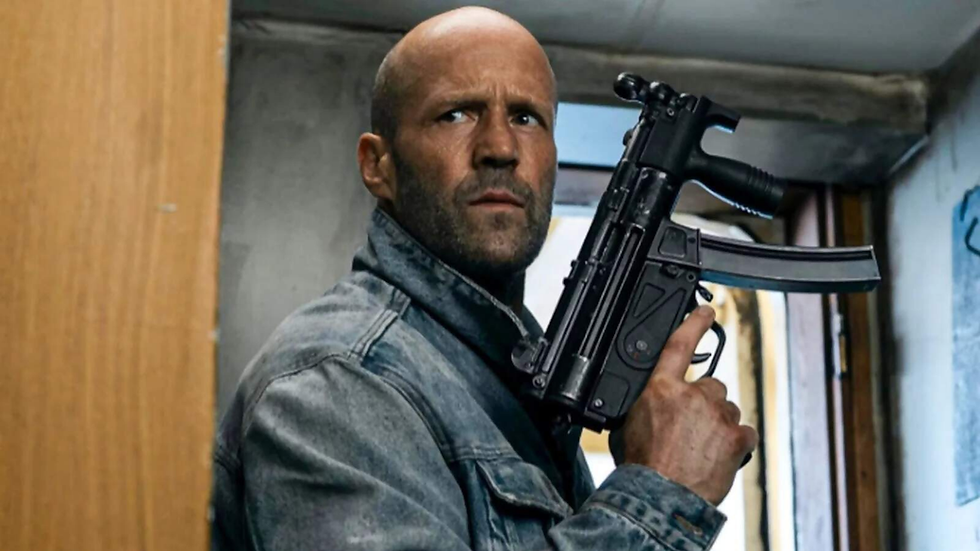
There's a version of this story where we shipped a lab operator to Malta for several weeks. Travel, accommodation, specialist kit, someone sitting in front of the hardware for the whole shoot. That's what a lot of productions would have assumed was the only way to do it properly. On Mutiny, we built a lab that nobody had to sit in front of.
The production's problem
The production team for Mutiny, the new film featuring Jason Statham, needed a fully functioning dailies lab in Malta: meticulous QC, reliable media management, fast turnaround on editorial deliveries, and a colour pipeline the DI team could trust all the way through to grade. What the production didn't want was the cost and logistical overhead of keeping a lab operator on the island for the duration of the shoot. It was a reasonable position and one we'd heard before. The question was whether we could make a remote setup work at the same quality as an in-person lab. We were confident we could, and we had a plan for how.
How we set up a remote lab
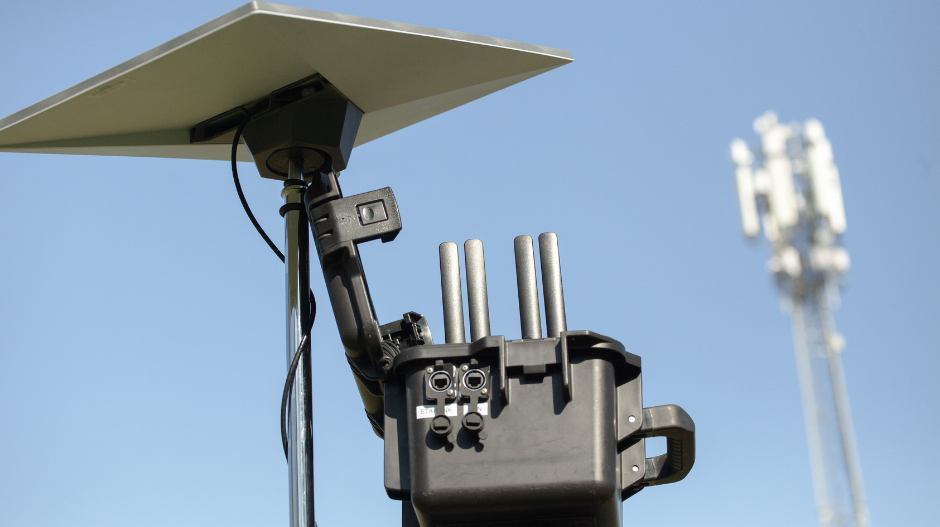
Alec Garner, Mission's Senior Dailies Operator, flew out to Malta once. He installed the hardware on location, got everything physically in place, and handed over to Jake Bentley, Mission's Head of Technology, who configured the network remotely from Shepperton.
Getting it working on the router at the location took some back-and-forth, Jake guiding Alec through the steps from the UK until everything clicked into place. The island had 300 to 500 megabits of available bandwidth, which was enough to run the full lab operation without delay. Once the connection was live, the experience from Mission's end was, in Jake's words, like being in the room with the machine. No noticeable lag. Frame-by-frame QC, image integrity checks, data verification, uploads and deliveries all carried out as normal lab operations.
From that point on, Alec and Mission Dailies Operator Raquel Martin Rivillos managed the day-to-day workflow from the UK. Raquel worked from home. Both also handled the lens metadata side of things, inputting focal lengths and lens notes for every clip to ensure everything downstream had what it needed. This was particularly important on Mutiny because the production was shooting on mostly vintage lenses, with a DCS Lens Metadata Encoder on set to capture what the cameras themselves couldn't.
Four locations, one workflow
At any given point during the shoot, the pipeline connected four different places: the production in Malta, Mission's operators in the UK, editorial teams receiving files internationally, and studio executives reviewing material in Los Angeles. Nobody needed to be in the same room or the same country. That kind of reach used to mean a much larger operation. Here it came down to thorough preparation, the right infrastructure, and operators who knew the workflow inside out.
Adding Origami Platform to the dailies package
On Mutiny, Mission packaged Origami Platform with its dailies service to handle the VFX pull automation and media management alongside the lab. For a Jason Statham action film with a relatively heavy VFX workload, the automation Origami brought to the process made a significant difference.

The key thing about this combination is timing. Because Mission was handling the dailies, the original camera files were on our system the moment they arrived from set. The traditional model for VFX pulls means waiting for LTOs to be shipped from location, ingested at a post facility, and only then can pulls begin to be set up. With Mission holding the dailies and Origami managing the pulls, that wait disappears. The material was available immediately and the automation began from the start.
DIT Ben Appleton had made careful, deliberate decisions on set throughout, including a move to D60 rather than D65 to achieve a specific result that would hold through to cinema. Keeping colour choices that precise intact through the full pipeline takes more than good intentions. Origami kept the pipeline exactly as Ben had set it. What he had approved on set was what arrived at DI, with no drift and no reinterpretation.
VFX pulls were automated through Origami's platform, removing the manual work that would otherwise have fallen to the post team. The whole process ran in-house, with no third-party facility involved in the VFX pipeline and no hand-offs to manage across organisations.
What it added up to
A production shot in Malta with a substantial VFX workload, tight international deliveries, and no dedicated lab operator on location still had a properly run lab, a clean colour pipeline, and automated VFX distribution. All of it managed from Shepperton.
For the production, that meant lower travel and accommodation costs without any compromise on QC. For the post pipeline, it meant material arrived earlier, the colour was right, and the VFX team had what they needed when they needed it. Because we're independently owned and not tied to any single facility's way of working, we could design the whole thing from scratch around what Mutiny actually needed. A larger corporate operation would have defaulted to a standard model. We built something that fitted the job.
If you're planning a shoot in a location where sending a full lab team isn't the obvious answer, or where VFX volume makes automated pull management worth considering, we'd be glad to talk through what a setup like this could look like for your production. Get in touch at production@missiondigital.co.uk
Credits
Senior Dailies Operator: Alec Garner | Dailies Operator: Raquel Martin Rivillos | Head of Technology: Jake Bentley | DIT: Ben Appleton | VFX pulls: Origami Platform


Comments